

Where to Put Social Proof on Your Shopify Store (and Why It Matters)

Most store owners know they need social proof. Reviews, testimonials, ratings, the usual advice. So they collect a few testimonials, drop them somewhere on the homepage, and move on. Then they wonder why it does not seem to do much. The problem is almost never the lack of social proof. It is placement. Social proof only works when a shopper sees the right kind at the exact moment they are having a doubt. Put it in the wrong place and it becomes wallpaper that no one reads.
This post is about placement and timing. What kinds of social proof exist, where each one belongs, and how to use them so they actually move shoppers toward a purchase instead of just decorating a page.
Why social proof works
People look to others to decide what to do, especially when they are unsure. When a shopper cannot personally verify that a product is good, the next best thing is evidence that other people found it good. That is the whole idea behind social proof. It borrows the trust a stranger has already earned and lends it to your product at the moment a new shopper is deciding.
The key phrase there is "at the moment a new shopper is deciding." Trust is not built in one big lump. It is built and lost in small moments as the shopper moves through your store, hits a doubt, and either finds reassurance or does not. Good social proof placement is really about anticipating those doubts and answering them right where they occur.
The main types of social proof
Not all social proof is the same, and different types answer different doubts. Knowing what each one does helps you place it well.
Written testimonials and reviews are the workhorse. They let a real customer speak in their own words about what the product did for them. They are especially good at answering specific objections, since a review often names the exact worry a new shopper has and then dismisses it.
Star ratings and review counts work as a fast, glanceable signal. A visitor does not have to read anything to register "4.8 stars from 2,000 buyers." That instant credibility is useful high up on a page where you have not earned attention yet.
Photo and video testimonials carry more weight than text because they are harder to fake and show a real human. For products where seeing the customer matters, they are worth the extra effort to collect.
Trust badges, guarantees, and certifications answer risk doubts rather than quality doubts. "Free returns," "money back guarantee," and relevant certifications reduce the fear of making a mistake.
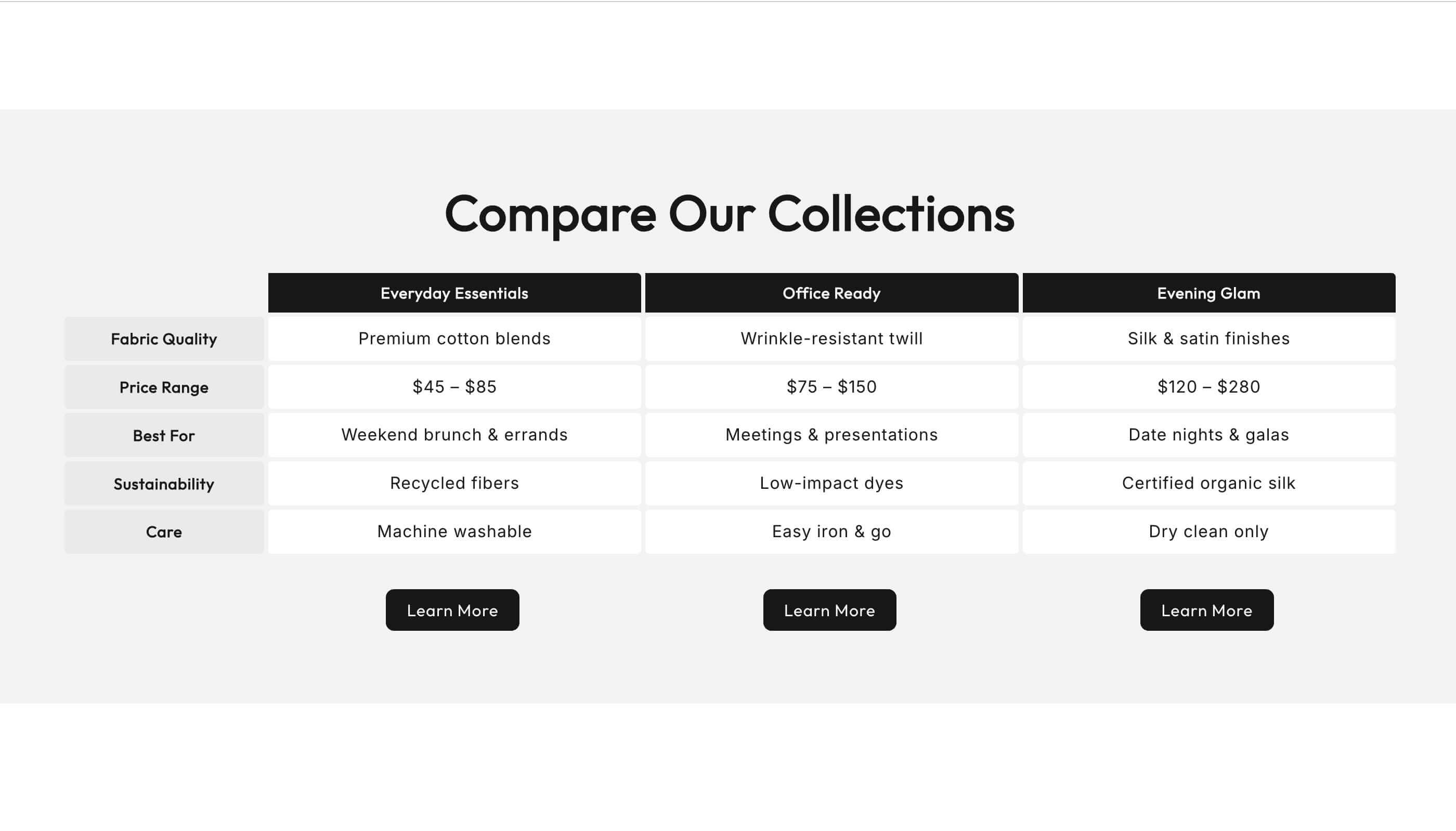
Comparison content is a quieter form of social proof that answers "why you and not the alternative." A clear comparison table that shows how your product stacks up against other options helps a shopper who is weighing you against a competitor or against doing nothing.
User counts and popularity signals, used honestly, tell the shopper that plenty of others already made this choice. "Trusted by 10,000 customers" only works if it is true, so never invent these.
Where each type belongs
Now the important part. Here is where to place social proof so it works with the shopper's mindset instead of against it.
The homepage
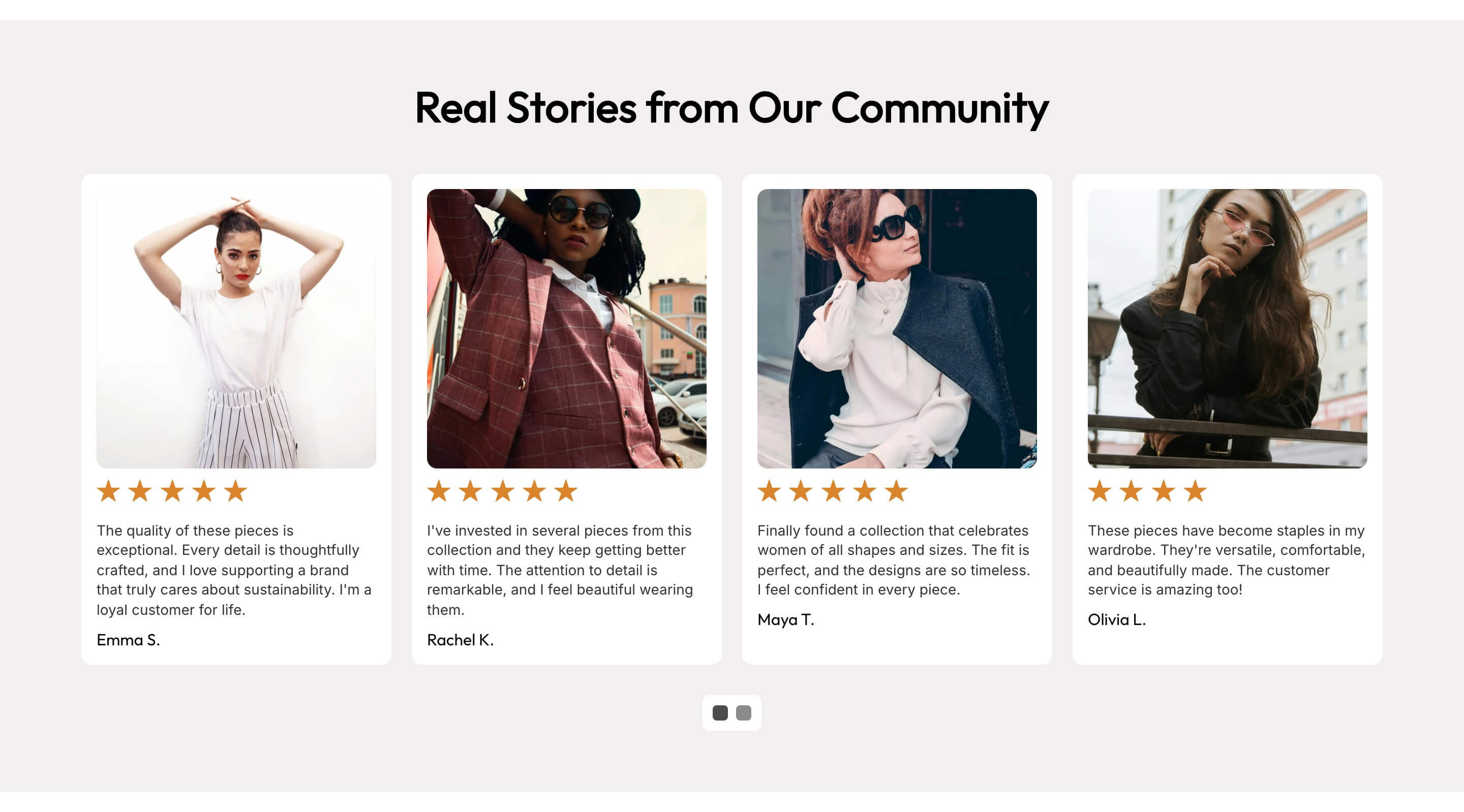
The homepage visitor is usually cold and just getting oriented. This is the place for broad, brand level social proof. A row of star ratings, a few strong testimonials, or a "trusted by" signal reassures a new visitor that your store is legitimate and worth exploring. Keep it light here. The homepage is not where you close the sale, so a compact testimonials section is usually enough. You are building baseline trust, not making the full case yet.
The product page
This is where social proof earns its keep, because this is where the buying decision actually happens. A shopper on a product page is close to deciding and full of specific doubts. Will it fit. Will it work for my situation. Is it worth the price. This is the place to put reviews and testimonials that answer those exact questions.
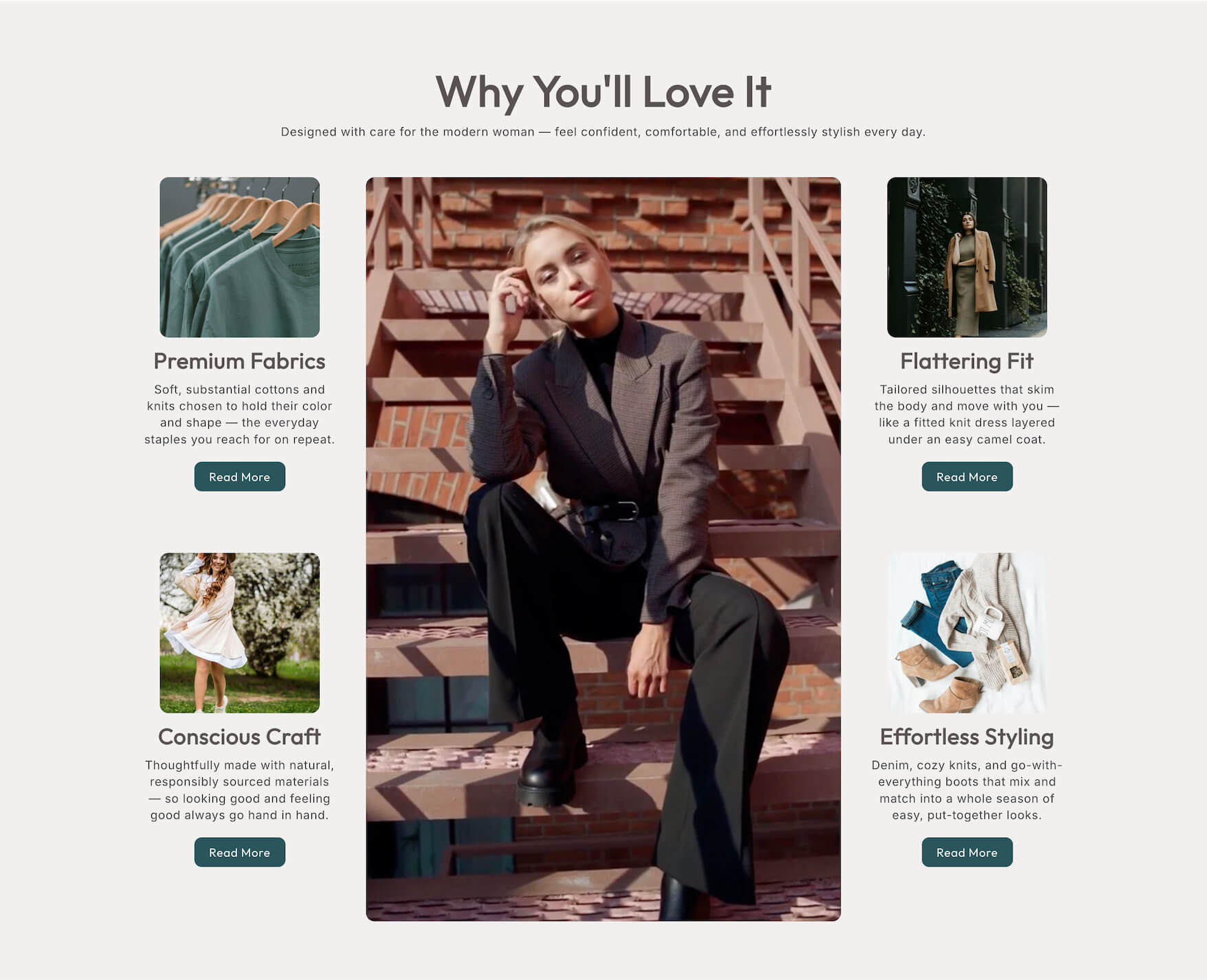
Star ratings belong near the top, close to the product title, so the shopper gets instant credibility before reading anything. Detailed reviews belong lower down, where a shopper who is seriously considering can dig in. If your product competes against obvious alternatives, a comparison table on the product page helps the shopper justify choosing you. And listing the concrete product benefits alongside real testimonials pairs your claim with the customer's confirmation, which is far stronger than either alone.
The cart and checkout
The cart is a moment of hesitation, so a small trust signal here can prevent an abandon. This is the place for reassurance about risk, not more product reviews. A short line about free returns, a money back guarantee, or secure checkout addresses the last minute doubt that makes people close the tab. Keep it minimal, since anything heavy at checkout risks distracting from completing the purchase.
Landing and campaign pages
A dedicated landing page for an ad or campaign should carry heavier social proof, because these visitors often arrive with high skepticism and no prior relationship with your brand. This is a good place for photo and video testimonials, detailed case style stories, and a comparison that positions your offer clearly. You have more room to make the full argument, so make it.
Common placement mistakes
A few habits quietly undercut otherwise good social proof.
The first is dumping everything in one place, usually a single testimonials block far down the homepage that most visitors never reach. Social proof works best spread across the journey, answering doubts where they occur, not stockpiled in one spot.
The second is generic, vague testimonials. "Great product, love it" proves nothing, because it could describe anything. Specific testimonials that name a real result or overcome a real objection do the actual work. Collect and feature the specific ones.
The third is ignoring the shopper's mindset at each step. A homepage visitor and a checkout visitor are not the same person with the same doubts, so the same social proof does not serve both. Match the type of reassurance to the stage.
The fourth is faking it. Invented reviews, fake user counts, and staged badges are a short term trick with a long term cost. If a shopper catches one fake signal, they distrust all your real ones too. Everything you display has to be true.
Getting it onto your Shopify store
Themes vary a lot in how well they handle social proof. Some include a decent reviews integration and a testimonials block. Many leave you with almost nothing, or with a rigid layout you cannot adapt to different pages.
Native sections give you flexibility without adding another app to your storefront. You can place a testimonials section on the homepage and again on key product pages, add a comparison table where shoppers weigh their options, and reinforce claims with a product benefits block, all edited in the standard theme editor. Because these are native, you are not loading a separate app on every page just to show a few quotes.
The takeaway
Social proof is not a box to check by adding one testimonials block and calling it done. It is a system that runs across your whole store, placing the right reassurance at the moment each doubt appears. Broad trust on the homepage, specific proof on the product page, risk reassurance at checkout, and the full argument on landing pages. Get the placement right and the same testimonials you already have will do far more work.
If your social proof is currently sitting in one spot, spreading it across the journey is one of the easiest wins available. Explore the Abra social proof sections or try a few from the Shopify App Store.
Frequently asked questions
How many testimonials should I show? Enough to be convincing, not so many that shoppers tune them out. A few strong, specific testimonials in the right place beat a long wall of generic ones. Quality and placement matter far more than quantity.
Where do reviews convert best? On the product page, where the buying decision happens and shoppers have specific doubts. Star ratings work near the top for instant credibility, while detailed reviews belong lower down for shoppers who want to dig in.
Is a comparison table a form of social proof? In a sense, yes. It answers the "why you and not the alternative" question that shoppers weigh, helping them justify choosing you over a competitor or over doing nothing. It works alongside testimonials rather than replacing them.